

Most of what makes a photograph feel calm and beautiful happens before anyone lifts a camera. It’s the light. Here is how I read a room or a field before I take a single frame, so you can do the same at home this week with a camera or the phone in your pocket.
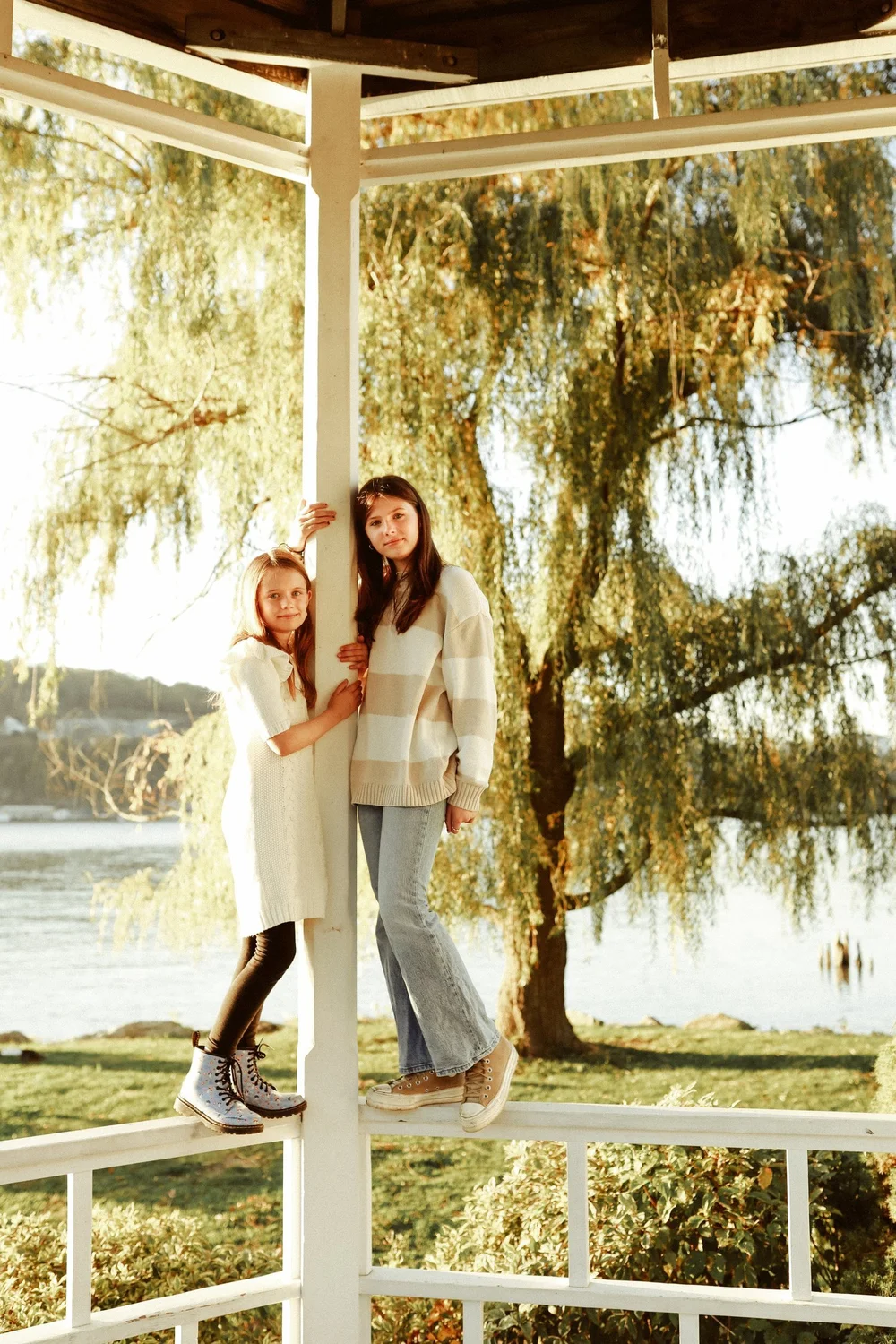
The first thing I do: turn the lamps off
The first thing I do in any home is switch off every lamp and overhead light in the room, even the ones that seem to help. Household bulbs are usually warm, around 2700K. Daylight from a window is much cooler, somewhere around 5500K to 6500K. When both land on a face, your camera can only correct for one of them, so you get orange cheeks on one side and blue shadows on the other. No filter fully fixes that.
The room will look darker to your eye for a moment. Your camera handles it fine, and the color comes back clean and true. Ceiling lights also shine straight down, which drops shadows into eye sockets and under the chin. Window light comes from the side, and that is far kinder to faces.
Questions parents ask me
Why do my indoor photos look orange or yellow?
Warm household bulbs are mixing with cooler daylight from the windows. Turn off every lamp and overhead light, use one window, and the color usually corrects itself. If it is still warm, set your camera's white balance to daylight.
Should I use flash for indoor photos of my kids?
I'd skip it. Flash flattens faces and tends to startle little ones. Move closer to a window, turn off the room lights, and let your camera or phone raise its sensitivity instead.
Get all five guides by email
This preview is yours to use today. The full series covers light, newborns at home, toddler expressions, sharp photos of fast kids, and framing that ages well. I will send them one at a time, then a two-page Field Card you can keep.
If you would ever like to be in the pictures too, here is how my sessions work, and more about family photography in the Hudson Valley.
Best,
— Gabby